Best cashback apps in the USA can turn purchases you were already planning to make into small but useful savings. The challenge in 2026 is not finding a cashback app, it is figuring out which one actually fits the way you spend.
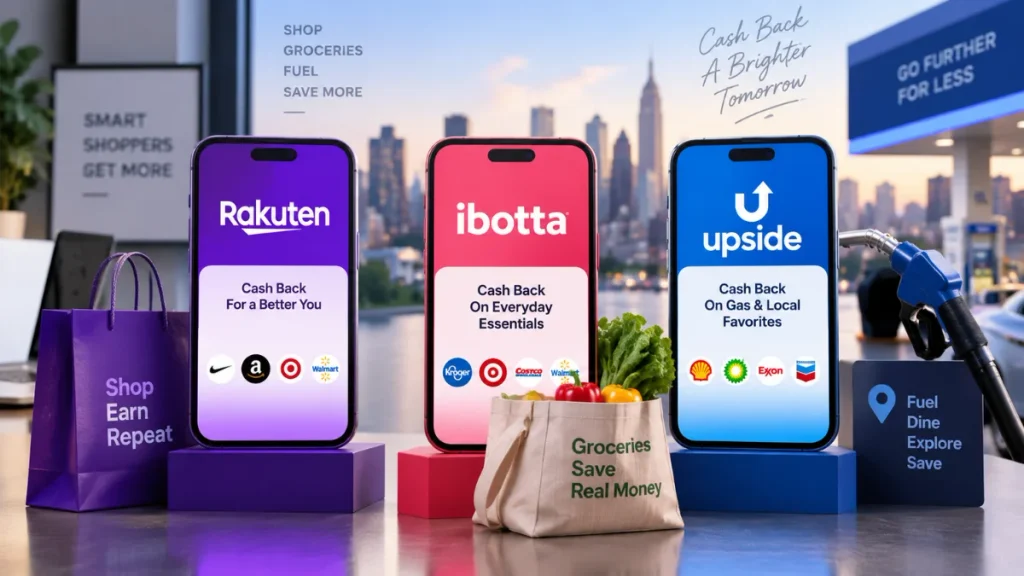
Rakuten, Ibotta, and Upside take noticeably different approaches. Rakuten focuses heavily on online shopping, Ibotta is particularly useful for grocery and retail offers, while Upside focuses on nearby gas stations, restaurants and grocery locations.
So, which one should you use?
This SavingGuideHub comparison looks at how all three work, where each is most useful and how you can combine cashback with smarter spending habits.
The best cashback apps in the USA reward you for eligible purchases made through participating retailers or offers.
The basic idea is straightforward. A retailer pays the cashback platform for helping generate a sale or visit. The platform then shares some of that revenue with you as cashback. However, the three apps in this comparison work differently.
Rakuten generally requires you to activate cashback before completing an eligible shopping trip. Ibotta lets you select qualifying offers and redeem them through receipts, linked loyalty accounts or supported online purchases. Upside generally asks you to claim a local offer before buying.
That difference matters because the right app depends on what you buy most often.
| Feature | Rakuten | Ibotta | Upside |
|---|---|---|---|
| Best suited to | Online shopping | Groceries & retail | Gas, dining & local groceries |
| Online shopping | Excellent | Available | Limited |
| Grocery savings | Some opportunities | Excellent | Location-dependent |
| Gas cashback | Not its main focus | Limited | Excellent |
| Browser extension | Yes | Yes | No main requirement |
| Receipt submission | Usually not required | Sometimes | Sometimes |
| Bank cash-out | Not primary method | Yes | Yes |
| PayPal | Yes | Yes | Yes |
| Best for | Frequent online shoppers | Grocery shoppers | Drivers |
Cashback rates and participating retailers can change, so always check the current offer before making a purchase.
Rakuten is one of the most established names among cashback apps in the USA, particularly for people who regularly shop online.
The concept is simple. You create a free account, find a participating retailer through Rakuten and activate the available cashback before completing your purchase.
Rakuten says it partners with thousands of stores. Shoppers can access offers through Rakuten.com, its mobile app or its browser extension. The retailer pays Rakuten for referring the shopper, and Rakuten shares part of that payment as cashback.
Suppose you are planning to buy something online.
Instead of visiting the retailer directly, you first open Rakuten or activate its browser extension. You then follow the link to the participating store and complete your purchase normally.
If the purchase qualifies, cashback is recorded in your Rakuten account.
Its browser extension can be particularly convenient because it can alert you when cashback is available while you are browsing a participating retailer.
Rakuten offers several redemption methods, including PayPal and physical checks. Its standard cashback payments are generally issued quarterly, although eligible confirmed balances can also have other redemption options.
Rakuten is worth checking before purchases such as clothing, electronics, beauty products, travel bookings, and other online orders.
That makes it a natural addition to a broader SavingGuideHub money-saving strategy, particularly if online shopping already forms part of your monthly spending.
The important rule is simple: do not buy something purely because the cashback percentage looks attractive. A 10% reward on an unnecessary $100 purchase still leaves you spending $90 you might otherwise have kept.
For households trying to reduce food and everyday shopping costs, Ibotta takes a different approach.
Rather than focusing mainly on clicking through to online stores, Ibotta allows users to browse offers from supported retailers, add qualifying offers, and then shop.

Depending on the retailer, cashback may be verified through a linked loyalty account, a receipt submission, or an eligible online transaction.
A typical Ibotta shopping trip might look like this:
Ibotta also supports online shopping offers, although exclusions and eligibility requirements vary between retailers.
That makes checking the conditions before purchasing important.
Ibotta can be especially useful when you already have a shopping list. Instead of allowing an offer to determine what you buy, build your grocery list first and then check whether Ibotta has cashback for any of those items.
This approach fits naturally with budgeting your monthly expenses because cashback becomes an extra saving rather than an excuse to increase spending. Ibotta also supports qualifying grocery pickup and delivery purchases through participating services and retailers.
According to Ibotta’s current support information, users need at least $20 in current earnings before they can link a bank account and withdraw those earnings.
For someone regularly buying groceries for a household, Ibotta can therefore be worth checking before the weekly shop.
Upside approaches cashback from a more location-based angle.
Instead of concentrating primarily on ecommerce, Upside connects users with participating gas stations, restaurants, convenience stores and grocery locations nearby.
You open the app, find an available offer, claim it and then make the eligible purchase. Upside says its app is free for consumers and that rewards are funded through its retailer partnerships.
Fuel is a recurring expense for millions of American households. If you regularly drive to work, take children to school or travel frequently, even relatively small savings per fill-up can accumulate over time.
This is where Upside has a different use case from Rakuten and Ibotta. Rather than opening the app because you want to shop online, you might open it before filling your tank to compare participating nearby offers.
The process is generally:
Upside says users can cash out to a bank account or choose gift-card options, while its main site also lists PayPal among available cash-out methods.
One important detail is that standard offers are not always processed instantly. Upside says most claims finish processing within four business days, although some locations may take up to ten.
Instead of asking which app is universally better, look at where your money already goes.
Rakuten is particularly useful when you regularly make online purchases and want a simple cashback system running alongside your existing shopping habits.
Installing the extension can also reduce the chance that you forget to activate an available offer.
Ibotta makes more sense for someone willing to spend a few minutes checking available offers before buying groceries and household essentials.
If food spending is putting pressure on your monthly finances, combine cashback with the SavingGuideHub budgeting guides rather than relying on rewards alone.
Upside deserves attention if fuel is one of your recurring expenses.
It can also offer cashback at participating restaurants and grocery locations, making it more than simply a gas rewards app. Upside currently describes its service as covering gas, groceries and dining.
Yes, and this can make more sense than trying to force every purchase through a single app.
For example, you could check Rakuten before an online electronics purchase, use Ibotta when grocery shopping and check Upside when you need gas.
There can even be situations where rewards can be combined with credit-card or retailer loyalty rewards. Upside, for example, says its offers can work alongside most retailer loyalty programmes and credit-card rewards. However, stacking cashback platforms on the exact same transaction requires more care.
Using competing affiliate or coupon services can interfere with tracking. Rakuten notes that arriving through another rewards or coupon site can override a Rakuten shopping trip, while Upside warns that certain outside promotions or affiliate cashback programmes may reduce or void its cashback.
Always read the offer conditions instead of assuming two cashback apps will stack.
Finding the best cashback apps in the USA is only half the job. Your spending behaviour determines whether they actually save you money.
A cashback app should reward planned spending.
It should not create new spending.
Before opening an app, decide what you actually need. This principle is central to the SavingGuideHub approach to smarter budgeting: reduce unnecessary spending first and optimise necessary purchases second.
Imagine one retailer sells something for $80 with no cashback while another charges $100 with 10% cashback. The second option gives you $10 back, but your final cost is still $90. The supposedly less rewarding store remains $10 cheaper.
Always compare the final cost rather than the cashback percentage alone.
Do not immediately throw away receipts or delete confirmation emails. They can become useful evidence if cashback fails to track. Rakuten recommends retaining relevant purchase information for missing-cashback claims, while Upside advises keeping receipts until cashback has processed.
Cashback frequently needs to be activated before a purchase. Building a quick “check cashback” habit before checkout can help prevent missed rewards.
For disciplined shoppers, they can be. The key word is disciplined. Cashback is most valuable when it reduces the cost of something you were already going to buy.
Suppose your household spends $500 on planned purchases and manages to recover an average of 3% through different rewards. That represents $15 returned from spending that was already in the budget.
But spending an additional $200 because an app advertises a tempting reward defeats the purpose. This is why cashback works best alongside money-saving strategies, a realistic household budget, and careful price comparisons.
Readers exploring broader ways to manage their finances can also visit SavingGuideHub for practical guides covering saving, budgeting and everyday financial decisions.
The best cashback apps in the USA do not all solve the same problem. Rakuten is geared strongly towards online shopping. Ibotta can be particularly useful for groceries and eligible retail purchases. Upside is designed around local spending such as gas, groceries and dining.
You also do not necessarily need to choose only one. A practical approach is to match each app to the spending you already do and check the relevant service before making an eligible purchase.
Most importantly, treat cashback as a bonus rather than a reason to shop.
For more ways to stretch your money, explore our Money Saving resources, build a realistic plan with our Budgeting guides, or learn more About SavingGuideHub and the practical financial information we publish.
If you have a suggestion for a future comparison or money-saving topic, you can also contact SavingGuideHub.
Rakuten, Ibotta and Upside are three major options with different use cases. Rakuten focuses heavily on online shopping, Ibotta covers groceries and other retail offers, while Upside focuses on participating gas stations, restaurants and grocery locations.
They work differently. Rakuten is built around shopping through participating retailers and is especially convenient for online purchases. Ibotta offers product and retailer-based rewards and can be particularly useful for grocery shopping. The more suitable option depends on where you spend.
Upside focuses heavily on local offers at participating gas stations, alongside restaurants, grocery stores and convenience stores.
You can have accounts with both and use them for different purchases. However, attempting to activate multiple cashback or affiliate-tracking services on the same online transaction can interfere with tracking, so check each offer’s terms before trying to stack rewards.
These services offer cash redemption options, although payment methods and thresholds differ. Rakuten supports options including PayPal and checks, Ibotta allows eligible users to withdraw to a linked bank account or PayPal, and Upside offers options including bank transfers, PayPal and gift cards.
They can be useful when applied to purchases you already planned to make. Their value falls quickly if cashback promotions encourage unnecessary spending.
That depends entirely on spending patterns, eligible offers and cashback rates. Someone who regularly makes qualifying purchases may accumulate meaningful savings, but cashback should not be treated as guaranteed income.

Contributor at SavingGuideHub, writing practical guides on finance, savings, and insurance.

Sharing practical finance and savings guidance.